| Author |
Message |
Kiev Savoie

Joined: 25 Oct 2007
Posts: 432
|
| Posted: Tue Jun 08, 2010 1:56 am Post subject: Anamorphic optics for CRT? |
|
|
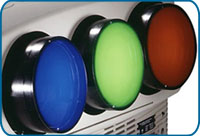
I was talking with Piratepowwow the other day and he brought up the anamorphic lens concept. My first reaction was that i had never heard of it being done on CRT so it must not be cost effective or does not offer any real world advantages. He had mentioned an idea using a cheap prism design and I thought about using a parabolic mirror. Here is the basic premise: you run scope material probably using a custom resolution like 819x1920 or something, the geometry is setup to use the full tube face so that the image is stretched vertically and the anamorphic optics "squeeze" it to the correct aspect ratio. Resulting hopefully in a brighter image, reduced tube wear and maybe slightly better resolution. Scan line burn in might be a problem but the picture orbiting feature set to the lowest setting that some PJ's have should take care of that pretty well.
So does this make any sense or am I right in thinking this has already been tried before to no avail?
|
|
| Back to top |
|
 |
Tom.W

Joined: 09 Mar 2006
Posts: 6635
|
| Posted: Tue Jun 08, 2010 2:09 am Post subject: |
|
|
|
Many have tried and all have failed....
|
|
| Back to top |
|
|
Kiev Savoie
Joined: 25 Oct 2007
Posts: 432
|
| Posted: Tue Jun 08, 2010 2:11 am Post subject: |
|
|
 so what is the major difficulty? so what is the major difficulty?
Last edited by Kiev Savoie on Tue Jun 08, 2010 2:13 am; edited 1 time in total
|
|
| Back to top |
|
|
yonexsp
Joined: 25 Apr 2006
Posts: 311
|
| Posted: Tue Jun 08, 2010 2:12 am Post subject: |
|
|
|
I thought about it long and hard, then decided a 9" would solve the problem or a stack. Simpler & cheaper. But now the digital revolution has taken all that away in reality
|
|
| Back to top |
|
|
cmjohnson
Joined: 03 Apr 2006
Posts: 5180
Location: Buried under G90s
|
| Posted: Tue Jun 08, 2010 2:16 am Post subject: |
|
|
Oh, be sure, anamorphic optics are available. Isco makes just such an item. It includes a motorized shuttle system to move it in front
of and away from the lens on demand, by remote control.
But at a cost of five thousand dollars each and with THREE being required for a single CRT projector, I know of not one person who
has actually chosen to pursue this option.
The big problem here is that CRT projector lenses are HUGE and hugely EXPENSIVE. Your typical 9" CRT projector will have US Precision
Lens HD-10s of some type with a 5.5 inch exit aperture.
A multi-element, adjustable focus, all-or-mostly glass element achromatic aspheric lens in the 5.5 inch size range is absolutely enormous
as lenses go. It is a piece of optical engineering on the same level as a fine camera lens, but on a larger scale.
It is actually such a specialized product category that I would not hesitate to state that it comprises the largest class
of complete lens systems that have ever been produced on a large scale, referring to their physical size in addition
to their high quality requirements. Try as you might, you won't find any comparable lens system designs that
are any larger, or even as large, as the ones made for CRT projectors, aside from perhaps the VERY high end,
very large specialty camera lenses beyond the 300 mm class. But even those are more rare than CRT lenses.
What lenses are bigger than CRT lenses? Just about nothing. Well, maybe in telescopes, but only when you
count the complete telescope system as the lens.
Though I don't have exact pricing, it's a given that a set of HD10 series lenses adds several thousand dollars to the cost of a CRT projector. I'd estimate it's at least 2000 dollars per lens, or more, at the pricing from the manufacturer to the customer. I know for
certain that there are some specialized CRT projection lenses that cost upwards of 10,000 dollars EACH.
What I'm trying to emphasize here is simply this: Big lenses of quality are very expensive. An anamorphic adapter is not cheap even
when made to work in front of a considerably smaller lens than any on a CRT projector. It also has to be a high quality piece of optics,
and must not introduce distortions into the picture aside from the anamorphic stretch. Such adapters built for CRT projectors with 5.5
inch diameter lenses would be enormously expensive, particularly in sets of three.
We do anamorphic on CRT by maximizing the raster width and reducing raster height to a 16:9 ratio because it's the only practical way
to get the job done.
If someone were to make high quality anamorphic lens adapters for our projectors at an affordable price in sets of three, be assured,
they would sell. But it seems that it's impossible as nobody has done it yet and the sun has all but set on the CRT as a technology still
in production anyway, with VDC being the only company still actively making CRT projectors.
CJ
|
|
| Back to top |
|
|
Kiev Savoie
Joined: 25 Oct 2007
Posts: 432
|
| Posted: Tue Jun 08, 2010 2:28 am Post subject: |
|
|
|
Yeah I've seen the price tag on the one's for digitals and it was the first thing to come to my mind. Have you heard of anyone trying a parabolic mirror? The idea is to point your projector straight up and put the mirror at an angle above it to reflect the image on to the wall. It could probably be a one piece deal for all three lenses and would be way easier to make once the geometry is figured out. Reflecting optics should introduce a lot less distortion as well.
|
|
| Back to top |
|
|
Nashou66

Joined: 12 Jan 2007
Posts: 16171
Location: West Seneca NY
|
|
| Back to top |
|
|
Kiev Savoie
Joined: 25 Oct 2007
Posts: 432
|
| Posted: Tue Jun 08, 2010 2:36 am Post subject: |
|
|
|
Man, if I only had the money! I'm just intrigued by the idea. It seems like a mirror type system could eliminate a lot of challenges and cost.
|
|
| Back to top |
|
|
km987654

Joined: 25 Jul 2007
Posts: 2874
Location: Australia
TV/Projector: Barco BG809s
|
| Posted: Tue Jun 08, 2010 2:38 am Post subject: |
|
|
|
Is there any reason that can't achieved electronically?
|
|
| Back to top |
|
|
HogPilot
Joined: 21 Jan 2010
Posts: 2383
TV/Projector: Vizio P702ui-B3, Pioneer Elite Pro-151FD & 111FD
|
| Posted: Tue Jun 08, 2010 2:47 am Post subject: |
|
|
Actually, a good mirror-based system would be even more complex and costly than properly-sized cylindrical lenses - here's a great read on the subject:
http://www.avsforum.com/avs-vb/showthread.php?p=13048356#post13048356
Cool idea...but uber expensive x3 to execute correctly!
_________________
| ecrabb wrote: | | Curt Palme wrote: | | Interesting, Mac isn't returning my emails. Go figure. |
He's mad at us for making Hog a moderator. He took his ball and went home.
SC |
|
|
| Back to top |
|
|
cmjohnson
Joined: 03 Apr 2006
Posts: 5180
Location: Buried under G90s
|
| Posted: Tue Jun 08, 2010 2:59 am Post subject: |
|
|
| km987654 wrote: | | Is there any reason that can't achieved electronically? |
We're doing it. It's called the anamorphic squeeze mod. It's very much a standard mod that practically every CRT
enthusiast puts into his PJ. It gives our projectors extended vertical size adjustment range
so the picture can be reduced in height enough to fit it into a 16:9 window with a little extra adjustment left over.
Usually it involves changing the values of three resistors. Simple.
CJ
|
|
| Back to top |
|
|
garyfritz

Joined: 08 Apr 2006
Posts: 12088
Location: Fort Collins, CO
|
| Posted: Tue Jun 08, 2010 3:33 am Post subject: |
|
|
Is that really required by any projectors but Marquees? And of course it doesn't achieve any of the goals of maximizing phosphor usage, maximizing lumens, etc.
The curved mirror definitely doesn't work. At some point some optical engineer or something posted mathematical models showing why it couldn't work. I think you end up with unresolvable focus issues, where the focal length varies significantly from top to bottom, or something like that.
There were a few experiments where guys tried to build giganto anamorphs using glass (plastic?) forms filled with oil or glycol, but I don't think any of those turned out very usable either.
|
|
| Back to top |
|
|
Spanky Ham
Joined: 22 Mar 2006
Posts: 5643
Location: Comedy Central
|
| Posted: Tue Jun 08, 2010 3:37 am Post subject: |
|
|
|
Chiem did the modeling over at AVS like five years ago and it was unworkable.
|
|
| Back to top |
|
|
cmjohnson
Joined: 03 Apr 2006
Posts: 5180
Location: Buried under G90s
|
| Posted: Tue Jun 08, 2010 3:49 am Post subject: |
|
|
If you could find someone to make lenses like these in suitable sizes and tailored for the application at a reasonable price, you'd be
a thousandaire in a few months.

|
|
| Back to top |
|
|
Kiev Savoie
Joined: 25 Oct 2007
Posts: 432
|
| Posted: Tue Jun 08, 2010 3:55 am Post subject: |
|
|
|
On my way home it did occur to me that the curve of the mirror would put a corresponding curve in the focal plane. I suppose that could be a headache.
|
|
| Back to top |
|
|
Kiev Savoie
Joined: 25 Oct 2007
Posts: 432
|
| Posted: Tue Jun 08, 2010 3:56 am Post subject: |
|
|
[quote="cmjohnson"]If you could find someone to make lenses like these in suitable sizes and tailored for the application at a reasonable price, you'd be
a thousandaire in a few months.
|
|
| Back to top |
|
|
km987654
Joined: 25 Jul 2007
Posts: 2874
Location: Australia
TV/Projector: Barco BG809s
|
| Posted: Tue Jun 08, 2010 4:55 am Post subject: |
|
|
| cmjohnson wrote: | | km987654 wrote: | | Is there any reason that can't achieved electronically? |
We're doing it. It's called the anamorphic squeeze mod. It's very much a standard mod that practically every CRT
enthusiast puts into his PJ. It gives our projectors extended vertical size adjustment range
so the picture can be reduced in height enough to fit it into a 16:9 window with a little extra adjustment left over.
Usually it involves changing the values of three resistors. Simple.
CJ |
Can you go the other way 16:9 to 4:3 to max the phosphor usage?
|
|
| Back to top |
|
|
deronmoped
Joined: 03 Nov 2006
Posts: 1154
Location: San Diego
|
| Posted: Tue Jun 08, 2010 6:12 am Post subject: |
|
|
I just ran my image out to within a hair of the edge of the tube. This made a big difference in how much phosphor I was using. Just moving the image out a quarter of a inch will give you like four square inches more of phosphor you will be using on the face of a 9" CRT. Another trick you can use is a high gain screen, like a HiPower and running the contrast lower. This will sharpen up the image and make the tubes last longer.
This stuff all has problems though. Running the image out to the edge makes it critical that you have everything centered correctly. I pulled the yokes back on the tubes to increase the image size without over driving the deflection circuits. The image now goes through a portion of the lenses that it was not designed for. This has thrown off my linearity towards the edges, because the lenses are not a matched set. I could correct most of it by swapping the lenses around for best convergence. Of course the focus will be not as good at the edges, but that is no big deal as you almost never look towards the edge of screen.
I also looked into a curved mirror or a prism type lens. It would take a genius and lots of work to come up with something doable.
Deron.
|
|
| Back to top |
|
|
David_Web
Joined: 02 May 2007
Posts: 418
Location: Sweden
|
| Posted: Tue Jun 08, 2010 9:03 am Post subject: |
|
|
In the C-element thread someone said they where able to CNC exact copies of the elements. Same should be doable with an anamorphic lens.
Still not sure there is enough benefit for doing it.
_________________
SNR of people are ridiculously low.
|
|
| Back to top |
|
|
Ile
Joined: 09 Mar 2006
Posts: 1491
Location: Jyväskylä, Finland
|
| Posted: Tue Jun 08, 2010 9:22 am Post subject: |
|
|
One Finnish guy made two anamorphic prism set for his G70, first was 24 deg with glycerol and second was 30 deg with water. Squeezing worked fine, but glycerol was eating all that extra brightness that more phosphorus was giving.
He sold his G70 before he tested some other stuff like parafin oil to first prism.
Last edited by Ile on Tue Jun 08, 2010 2:09 pm; edited 1 time in total
|
|
| Back to top |
|
|
|
|