| Author |
Message |
CIR Engineering

Joined: 25 Aug 2008
Posts: 4269
Location: Chicago USA & Berlin Germany
|
| Posted: Mon May 07, 2012 3:18 pm Post subject: They do look good together :) |
|
|
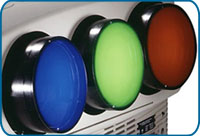
Here is the back of my own G90. The two best IFB cards ever made, the IFB v2 on top and the IFB v3 on bottom. I like keeping one of the best versions of any cards that come out. I still have one of JohnHW's DVI cards in another of my G90s because that one is also really good. But it's just kind of nice to see four HDMI inputs and a 3D output on the back of my theater G90 

craigr
_________________
JETI 1501-HiRes 2nm Spectroradiometer
JETI 1211 Spectroradiometer
Photo Research PR-650 Spectroradiometer
Klein K10-A Colorimeter
Murideo Fresco SIX-G HDMI 2.x Multimedia Generator
Murideo Fresco SIX-A HDMI 2.x Analyzer
Light Illusion ColourSpace XPT Color Calibration Software
Light Illusion LightSpace XPT Pro Version 10.x Color Calibration Software
OMARDRIS JVC Software Patch to use K10-A and Jeti with JVC OEM AutoCal Software!
Sencore CR7000 CRT Tube Analyzer / Rejuvenater
Authorized Dealer for Lumagen & just about everything worth buying 
www.CIR-Engineering.com - craigr@cir-engineering.com
Phone: 865-405-6892
|
|
| Back to top |
|
 |
kabuby77
Joined: 28 Mar 2011
Posts: 147
Location: Italy
|
| Posted: Tue May 08, 2012 9:42 am Post subject: |
|
|

Can you make some tests?
|
|
| Back to top |
|
|
CIR Engineering
Joined: 25 Aug 2008
Posts: 4269
Location: Chicago USA & Berlin Germany
|
| Posted: Tue May 08, 2012 12:50 pm Post subject: |
|
|
Well the two cards have very similar video quality to one another. Moome totally redesigned the opamp configuration for the v3, but video wise on screen I don't see much difference as both are outstanding. The v1 and v2 used three discrete opamps while the v3 uses a brand new opamp that has all three amps on one IC.
The DA IC config is the same as that on the v2 and is still excellent.
The v3 board has a better power supply and is cleaner. The v3 also uses a newer HDMI chip.
On the v3 Moome added a small speaker (in the black can) that chirps when the card receives a remote command (in addition the led still flashes like the earlier cards). The chirp is helpful when working with the remote.
Both cards do an excellent job with 1080p 72Hz and below.
craigr
_________________
JETI 1501-HiRes 2nm Spectroradiometer
JETI 1211 Spectroradiometer
Photo Research PR-650 Spectroradiometer
Klein K10-A Colorimeter
Murideo Fresco SIX-G HDMI 2.x Multimedia Generator
Murideo Fresco SIX-A HDMI 2.x Analyzer
Light Illusion ColourSpace XPT Color Calibration Software
Light Illusion LightSpace XPT Pro Version 10.x Color Calibration Software
OMARDRIS JVC Software Patch to use K10-A and Jeti with JVC OEM AutoCal Software!
Sencore CR7000 CRT Tube Analyzer / Rejuvenater
Authorized Dealer for Lumagen & just about everything worth buying
www.CIR-Engineering.com - craigr@cir-engineering.com
Phone: 865-405-6892
|
|
| Back to top |
|
|
CasetheCorvetteman

Joined: 09 Nov 2008
Posts: 6326
Location: Australia
|
| Posted: Tue May 08, 2012 1:10 pm Post subject: |
|
|
|
Is there going to be one for the NEC XGs?
|
|
| Back to top |
|
|
CIR Engineering
Joined: 25 Aug 2008
Posts: 4269
Location: Chicago USA & Berlin Germany
|
| Posted: Tue May 08, 2012 1:23 pm Post subject: |
|
|
| CasetheCorvetteman wrote: | | Is there going to be one for the NEC XGs? |
I haven't asked Moome about this card for an NEC. I am not sure it would be worth it though because the NEC may have trouble with really high clock rates for 1080p 72Hz and higher.
Moome's current NEC HDMI card is really nice and top notch. He almost stopped making it about a year ago, but we all petitioned him on the forum to continue building it. The NEC's are really nice projectors and deserve an HDMI card. However a new design may not be worth it for Moome considering the time and expense for a more limited customer base.
I suspect about the only thing an NEC would benefit from on the new card would be the 3D sync output if you wanted to run 3D. You are the frist person I know of that is running 3D on their NEC. I have a 135 on the schedule for the first week of June that will be getting a RadianceXS with 3D and that will be my first NEC 3D.
I am sending you a PM.
craigr
_________________
JETI 1501-HiRes 2nm Spectroradiometer
JETI 1211 Spectroradiometer
Photo Research PR-650 Spectroradiometer
Klein K10-A Colorimeter
Murideo Fresco SIX-G HDMI 2.x Multimedia Generator
Murideo Fresco SIX-A HDMI 2.x Analyzer
Light Illusion ColourSpace XPT Color Calibration Software
Light Illusion LightSpace XPT Pro Version 10.x Color Calibration Software
OMARDRIS JVC Software Patch to use K10-A and Jeti with JVC OEM AutoCal Software!
Sencore CR7000 CRT Tube Analyzer / Rejuvenater
Authorized Dealer for Lumagen & just about everything worth buying
www.CIR-Engineering.com - craigr@cir-engineering.com
Phone: 865-405-6892
|
|
| Back to top |
|
|
CasetheCorvetteman
Joined: 09 Nov 2008
Posts: 6326
Location: Australia
|
| Posted: Tue May 08, 2012 1:50 pm Post subject: |
|
|
Cheers mate, i have the current NEC HDMI MOOME card in my Runco.
PM replied to
|
|
| Back to top |
|
|
kal
Forum Administrator
Joined: 06 Mar 2006
Posts: 18114
Location: Ottawa, Canada
TV/Projector: JVC DLA-NZ7
|
|
| Back to top |
|
|
CIR Engineering
Joined: 25 Aug 2008
Posts: 4269
Location: Chicago USA & Berlin Germany
|
| Posted: Tue May 08, 2012 2:23 pm Post subject: |
|
|
| kal wrote: | | CIR Engineering wrote: | | Moome's current NEC HDMI card is really nice and top notch. He almost stopped making it about a year ago, but we all petitioned him on the forum to continue building it. |
Nobody was buying them so he stopped making them. The best way to petition is to actually buy one.
Kal |
I think he did make another batch Kal, or at least Moome has them available again. I spoke with him yesterday about getting an NEC board and he is ready to send it to me when I need it.
craigr
_________________
JETI 1501-HiRes 2nm Spectroradiometer
JETI 1211 Spectroradiometer
Photo Research PR-650 Spectroradiometer
Klein K10-A Colorimeter
Murideo Fresco SIX-G HDMI 2.x Multimedia Generator
Murideo Fresco SIX-A HDMI 2.x Analyzer
Light Illusion ColourSpace XPT Color Calibration Software
Light Illusion LightSpace XPT Pro Version 10.x Color Calibration Software
OMARDRIS JVC Software Patch to use K10-A and Jeti with JVC OEM AutoCal Software!
Sencore CR7000 CRT Tube Analyzer / Rejuvenater
Authorized Dealer for Lumagen & just about everything worth buying
www.CIR-Engineering.com - craigr@cir-engineering.com
Phone: 865-405-6892
|
|
| Back to top |
|
|
kal
Forum Administrator
Joined: 06 Mar 2006
Posts: 18114
Location: Ottawa, Canada
TV/Projector: JVC DLA-NZ7
|
|
| Back to top |
|
|
cinema mad
Joined: 25 Nov 2009
Posts: 219
|
| Posted: Wed May 23, 2012 1:34 pm Post subject: |
|
|
| CIR Engineering wrote: | Well the two cards have very similar video quality to one another. Moome totally redesigned the opamp configuration for the v3, but video wise on screen I don't see much difference as both are outstanding. The v1 and v2 used three discrete opamps while the v3 uses a brand new opamp that has all three amps on one IC.
The DA IC config is the same as that on the v2 and is still excellent.
The v3 board has a better power supply and is cleaner. The v3 also uses a newer HDMI chip.
On the v3 Moome added a small speaker (in the black can) that chirps when the card receives a remote command (in addition the led still flashes like the earlier cards). The chirp is helpful when working with the remote.
Both cards do an excellent job with 1080p 72Hz and below.
craigr |
Craig putting you on the spot thus bringing out the extreme critical eye Video file in you 
Would you say that in comparing the V2 with V3's picture quality, it's indistinguishable between the two cards or the V3
has A slight edge..
On A side note Have you or anyone out there had A chance to try out the new Darblet from Darbee?
Pretty much Everyone that has experienced the Darblet inc some Top calibrators are saying its the real deal..
Im dying to add one to my video chain> Blu-Player > Radiance 3D VP > Darblet > Moome v2..
http://darbeevision.com/
Cheers..
|
|
| Back to top |
|
|
Ron W
Joined: 07 Aug 2009
Posts: 860
Location: Mississauga
|
| Posted: Wed May 23, 2012 2:43 pm Post subject: |
|
|
| cinema mad wrote: | | CIR Engineering wrote: | Well the two cards have very similar video quality to one another. Moome totally redesigned the opamp configuration for the v3, but video wise on screen I don't see much difference as both are outstanding. The v1 and v2 used three discrete opamps while the v3 uses a brand new opamp that has all three amps on one IC.
The DA IC config is the same as that on the v2 and is still excellent.
The v3 board has a better power supply and is cleaner. The v3 also uses a newer HDMI chip.
On the v3 Moome added a small speaker (in the black can) that chirps when the card receives a remote command (in addition the led still flashes like the earlier cards). The chirp is helpful when working with the remote.
Both cards do an excellent job with 1080p 72Hz and below.
craigr |
Craig putting you on the spot thus bringing out the extreme critical eye Video file in you
Would you say that in comparing the V2 with V3's picture quality, it's indistinguishable between the two cards or the V3
has A slight edge..
On A side note Have you or anyone out there had A chance to try out the new Darblet from Darbee?
Pretty much Everyone that has experienced the Darblet inc some Top calibrators are saying its the real deal..
Im dying to add one to my video chain> Blu-Player > Radiance 3D VP > Darblet > Moome v2..
http://darbeevision.com/
Cheers.. |
This Darblet unit does look quite interesting. I am just wondering about the technology behind it that, on the surface, would seem no one else has thought of yet that would produce the noticeably enhanced images they are touting, especially for the price. Also, given the issues with HDMI connections, I wonder how it would function with multiple pieces of equipment connected in the chain of your own example?
|
|
| Back to top |
|
|
cinema mad
Joined: 25 Nov 2009
Posts: 219
|
|
| Back to top |
|
|
CIR Engineering
Joined: 25 Aug 2008
Posts: 4269
Location: Chicago USA & Berlin Germany
|
| Posted: Wed May 23, 2012 5:25 pm Post subject: |
|
|
| cinema mad wrote: |
Craig putting you on the spot thus bringing out the extreme critical eye Video file in you
Would you say that in comparing the V2 with V3's picture quality, it's indistinguishable between the two cards or the V3
has A slight edge..
On A side note Have you or anyone out there had A chance to try out the new Darblet from Darbee?
Pretty much Everyone that has experienced the Darblet inc some Top calibrators are saying its the real deal..
Im dying to add one to my video chain> Blu-Player > Radiance 3D VP > Darblet > Moome v2..
http://darbeevision.com/
Cheers.. |
Interesting, I hadn't seen this product before. My first instinct was that this is going to be real sh*t. But I decided to have a look at the manual before saying anything. It turns out that this can be none other than genuine sh*t.
This device manual says;
| Quote: | Hi Def
We call this mode Hi Def because it makes high fidelity content, which you might think cannot be
improved, even better. At the request of major consumer electronics manufacturers, we developed this
mature variant of our original firmware to offer a very clean image pop virtually free from processing
artifacts. When used with Blu-ray and other high quality video sources, the result is stunning. Of the
three viewing modes, Hi Def best preserves the original look of the video while imparting startling clarity
and depth, thus endowing your video with an elegant and refined feeling of enhanced realism. |
The whole point of high end video, especially BD, is to preserve the original content and present it as close to the original quality as possible. In some circumstances it may be beneficial to alter the video signal (correct the video signal) with a video processor in such a way that the original image is better represented.
If it is determined that correction is required it should be done with a delicate hand and to only the aspects of the image which require correction. For example, if the red coordinates in a color gamut are displaying over saturated on screen, you would want a control to add blue and green to the red such that it becomes correctly saturated. Doing something like adding an edge enhancement or noise filter to the signal will not help the red primary and will degrade other qualities of the image if those adjustments are not required.
This product simply states and implements a set of "enhancements" with a broad stroke over a potentially large amount of image characteristics. Most likely what this product does is one of a few things or all of the following. It may implement a noise filter or filters to remove noise making the image look cleaner. This has the effect of softening the image. It probably adds edge enhancements to resharpen the image, but edge enhancements never recover lost date from filtration and always add some ringing which covers up actual image details. This device probably also does something to the color gamut or "color decoder" to make colors appear different. Usually when this type of arm waving is applied it is to create a larger color gamut or higher saturation which looks more pleasing when not evaluating technically. Typically the red is increased, but other formulas could be used.
It is possible that some display device out there could just so happen to be a perfect match for this device. Or maybe they have identified a few main issues that are common on consumer level flat panels that often in need of correction. In this case a processor like this could possible be a good generic option if your display lacks the controls necessary to fix the issue on your particular display.
The age of BD has brought really high quality sources right to us and they really don't need any sort of generic correction. This device is certainly not applicable to CRT, but I suppose if I knew more about it there could possibly be an application on certain digital displays with a know problem that is known to be fixed with the implemented features in something like this.
I guess you could also make an argument for things like video games and other sources that don't really need to be correct, but instead do benefit sometimes from enhancements.
craigr
_________________
JETI 1501-HiRes 2nm Spectroradiometer
JETI 1211 Spectroradiometer
Photo Research PR-650 Spectroradiometer
Klein K10-A Colorimeter
Murideo Fresco SIX-G HDMI 2.x Multimedia Generator
Murideo Fresco SIX-A HDMI 2.x Analyzer
Light Illusion ColourSpace XPT Color Calibration Software
Light Illusion LightSpace XPT Pro Version 10.x Color Calibration Software
OMARDRIS JVC Software Patch to use K10-A and Jeti with JVC OEM AutoCal Software!
Sencore CR7000 CRT Tube Analyzer / Rejuvenater
Authorized Dealer for Lumagen & just about everything worth buying
www.CIR-Engineering.com - craigr@cir-engineering.com
Phone: 865-405-6892
|
|
| Back to top |
|
|
ecrabb
Forum Moderator

Joined: 13 Mar 2006
Posts: 15909
Location: Utah
TV/Projector: JVC RS40, Epson 5010
|
| Posted: Wed May 23, 2012 6:36 pm Post subject: |
|
|
Hey, Craig -
I'm all for calibration and faithful representation. It's critically important. But, once we have that baseline, why can't we play with the image a bit to make it look a bit "better" if we think that's what it should look like? I liken it to bass and treble controls or EQ. I've never EQ'd my system completely flat because it sounds boring and lifeless. I've always applied a "house curve" because it sounds better. A lot better. Is it faithful reproduction? Not exactly, but I don't care because *I like it*.
Face it: All photography and video is just a representation of reality, and not a very faithful one at that - even at the highest of high-end. Color gamuts are compressed, high-frequencies are filtered and down-sampled, the production designers and art directors have their way with it, it's color-graded by more humans, and finally jammed into a codec with a bitrate that represents a mere fraction of its former uncompressed self. Then it's decoded again in your player, and finally displayed. After all that, after all those steps in the chain, who's to say what, exactly something should look like and what should look "better"?
Like I said, I'm all for calibration and having a known target - a standard. But, once we establish that baseline, why not "tweak" if indeed, in the end, the picture looks "better", whether that be a bit more colorful, a bit more life-like, or just a bit more interesting?
Besides, I think the Darblet is doing a lot more than you think, and none of the things you imaged it was. Read the white paper, and then see what you think. I don't think it's snake oil or sh*t as much as it's unabashedly saying, "we can do something to the image that will make the image 'pop' and be more interesting, and that people will prefer that, so long as you can enable disable it, why not?"
http://darbeevision.com/assets/documents/DarbeeVision%20Whitepaper%20with%20Tech%20Details%2020120415.pdf
I can say after sitting through a pretty lengthy demo of a processor and projector at CEDIA last year, I have a different perspective. The box (can't remember the name) enlarged the color gamut by shifting the primaries out, but leaving mid-tones where they were supposed to be. So, for instance, skin tones stayed faithful, but intense colors became more intense.
I have to say, after seeing that demo, "faithful" reproduction doesn't necessarily have to be the target, IMHO. Not as a home user who wants to watch movies, anyway. If you're in mastering, yes...
This is an interesting discussion, but it probably doesn't belong in this thread. Shall I split these posts off into a new thread specifically on the Darblet?
SC
|
|
| Back to top |
|
|
ecrabb
Forum Moderator
Joined: 13 Mar 2006
Posts: 15909
Location: Utah
TV/Projector: JVC RS40, Epson 5010
|
| Posted: Wed May 23, 2012 6:53 pm Post subject: |
|
|
OK, brain fart. At CEDIA, what I saw *was* the Darbee box (an earlier, larger, more expensive version), driving a TruVue VANGO LED projector. The LED projector had a significantly larger color space than Rec. 709, so this box was a really good match for that projector. I have to say, it was honestly beautiful to look at.
This should be a really interesting thread, so I'm going to leave it here for awhile, then split these posts into a new "DarbeeVision Darblet" thread tonight.
SC
|
|
| Back to top |
|
|
Nashou66

Joined: 12 Jan 2007
Posts: 16171
Location: West Seneca NY
|
|
| Back to top |
|
|
cinema mad
Joined: 25 Nov 2009
Posts: 219
|
| Posted: Thu May 24, 2012 2:58 am Post subject: |
|
|
Heres A link to A Darblet review by A respected pro calibrator umr http://homecinemaguru.com/?p=1909
From My understanding This tec was originally used in the pro side of the market for Hollywood colorists & apparently the Algorithm will not alter Gamut/Hue.
Quote"1. Our mantra is..."Make the best picture fidelity that you can, then process with DVP." Great in...sublime out.
2. Calibrate with instruments to achieve the desired fidelity factors for your display hardware. Then add DVP and calibrate with your eyes. At that point your color calibration (by instruments) should confirm that we don't change the hue, your eyes/brain will confirm if you like the luminance of each pixel. -DD"
Darbee Visual Presence technology doesn't modify noise, blocking, or scale the image, so put the Darblet after such global image modification technologies. The Darblet creates a greater appearance of clarity and natural contrast so you may turn down the sharpening and contrast sweetening/modification technologies in the devices that are in line before it.
- DD
Quote"This White Paper explains the genesis of the technology and development of the product"
http://darbeevision.com/assets/documents/DarbeeVision%20Whitepaper%20with%20Tech%20Details%2020120415.pdf
Quote"These may also help explain the science behind this process"
http://www.engineeringtv.com/video/Darbee-Visual-Presence-DVP;CES-2011
http://www.engineeringtv.com/video/DarbeeVision-DVP-History
Alan Gouger now runs the Darblet with his 4K Barco DPI projector, It seems From what Im reading the sharper the projector the better the Darblet performs even with projectors like Sim2 Lumis DLP..
Cheers..
|
|
| Back to top |
|
|
kabuby77
Joined: 28 Mar 2011
Posts: 147
Location: Italy
|
| Posted: Thu May 24, 2012 11:52 am Post subject: |
|
|
|
I don't like too many things in the video chain. Radiance has a lot o filters too.
|
|
| Back to top |
|
|
Ron W
Joined: 07 Aug 2009
Posts: 860
Location: Mississauga
|
| Posted: Thu May 24, 2012 12:31 pm Post subject: |
|
|
|
If one watches the video interviewing the founder and discussing the technology, it sounds like the ultimate goal here is to have this technology inserted in to display devices on a mass basis.
|
|
| Back to top |
|
|
mc86

Joined: 20 Sep 2008
Posts: 767
Location: pittsburgh, pa
TV/Projector: ECP 4500 (Vidikron box), ECP4500+, wanting 07MS/07MTS, evaluating pc soft-blend
|
| Posted: Thu May 24, 2012 2:46 pm Post subject: |
|
|
http://www.google.com/patents/US7995835
The patent gives a 19 step procedure for how to implement the system directly using Adobe Photoshop -- so there need be no confusion as to what they do, although details over the setting variation is the $250 darblet vs the more powerful box, etc. are unclear to me still. The psychology they claim is overviewed in the patent:
Insights into brain theory and neurophysiology inspired the Darbee Transform. Binocular creatures possess brains that combine the signals arising in the retina of each eye in a structure called the lateral geniculate nucleus, or LGN. The LGN interdigitates the two retinal images and generates signals that eventually drive the muscles of the eyes to minimize the disparity, or difference between the images, by converging the eyes at the point of attention. LGN neurons compute the image disparity with the help of a process known as lateral inhibition, a phenomenon found ubiquitously throughout nervous systems of all kinds.
The Darbee Transform capitalizes on these phenomena, and the inventor believes that it thereby processes images in a way that would have been computed anyhow by neural circuits in the pathway between the retinas and the visual cortex. Looking on natural brain processes as a filter, DVn simply presents to the filter input that which the filter is designed to pass to its output anyhow, so the information goes, as it were, straight through. As a partial validation of this explanation as to why DarbeeVision works, it is interesting to note that viewing DVn images with only one eye seems to enhance the perceived 3D effect. In that case, it is not possible to explore the image normally by changing the convergence point of both eyes, so the brain is “fooled” into believing that the image is stereo, as if it had been perceived using both eyes.
Matt
|
|
| Back to top |
|
|
|
|