| Author |
Message |
tse
Joined: 03 May 2006
Posts: 1014
Location: Sweatbucket, Fl.
|
| Posted: Tue Jan 05, 2010 2:50 am Post subject: |
|
|
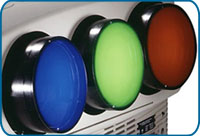
The LEDs are mounted on standard aluminum extrusion heatsinks, air cooled with regular fans.
Scott
_________________
"Were we directed from Washington when to sow and when to reap, we would soon want bread."
Thomas Jefferson
|
|
| Back to top |
|
 |
Spanky Ham

Joined: 22 Mar 2006
Posts: 5643
Location: Comedy Central
|
| Posted: Thu Jan 07, 2010 6:20 am Post subject: |
|
|
|
Thanks, Scott. Now I have a better understanding of how they are working. That was the one area I didn't have any knowledge of.
|
|
| Back to top |
|
|
dturco

Joined: 06 Feb 2009
Posts: 3778
Location: Eastern Shore Maryland
TV/Projector: Runco DLP VX-3000i Marquee 9500 parts doner
|
| Posted: Thu Jan 07, 2010 3:06 pm Post subject: |
|
|
| macgyver655 wrote: | This is a LED DLP is current production.


 |
Mac can you divulge what Projector this is?
_________________
Firefly rules. Can't stop the signal.
http://www.hulu.com/firefly
|
|
| Back to top |
|
|
macgyver655
Joined: 22 Aug 2007
Posts: 8508
|
| Posted: Thu Jan 07, 2010 4:08 pm Post subject: |
|
|
Because they are pics of copyrighted material I probably shouldn't. Probably the same reason Scott wouldn't post any. Of course he could probably get permission... 
|
|
| Back to top |
|
|
macgyver655
Joined: 22 Aug 2007
Posts: 8508
|
| Posted: Thu Jan 07, 2010 5:26 pm Post subject: |
|
|
I'm still thinking about this group mirror thing, even tho I posted the group reset procedure. I've been doing some random reading but I may have to see if I can acquire the DMD software. However I came across this that has me thinking again.
Quote:
"Error-diffusion artifacts caused by averaging a shade over different pixels, since one pixel cannot render the shade exactly."
End Quote
Now I agree on the 1 mirror per pixel (per se) issue, but I'm still thinking multiple mirrors have to be used to increase a shade or contrast of an area of the image.
I'll continue random reading and post any other stuff of relevance I come across.
Comments are also welcome.
|
|
| Back to top |
|
|
garyfritz

Joined: 08 Apr 2006
Posts: 12088
Location: Fort Collins, CO
|
| Posted: Thu Jan 07, 2010 5:30 pm Post subject: |
|
|
|
I believe I read that the TI DMDs handle 1024 levels of brightness. That means you have 30 bits of color represented in each and every individual pixel. I can't believe you'd need to dither pixels together to handle shading.
|
|
| Back to top |
|
|
macgyver655
Joined: 22 Aug 2007
Posts: 8508
|
| Posted: Thu Jan 07, 2010 5:48 pm Post subject: |
|
|
| garyfritz wrote: | | I believe I read that the TI DMDs handle 1024 levels of brightness. That means you have 30 bits of color represented in each and every individual pixel. I can't believe you'd need to dither pixels together to handle shading. |
Maybe Gary, but at what maximum level. 1024 levels but maybe the max brightness is 10 (simple number for reference only) but when using an adjoining mirror the maximum level is increased to 20.
|
|
| Back to top |
|
|
macgyver655
Joined: 22 Aug 2007
Posts: 8508
|
| Posted: Thu Jan 07, 2010 5:50 pm Post subject: |
|
|
| macgyver655 wrote: | | garyfritz wrote: | | I believe I read that the TI DMDs handle 1024 levels of brightness. That means you have 30 bits of color represented in each and every individual pixel. I can't believe you'd need to dither pixels together to handle shading. |
Maybe Gary, but at what maximum level. 1024 levels but maybe the max brightness is 10 (simple number for reference only) but when using an adjoining mirror the maximum level is increased to 20. |
Oh, bye the way. I'm switching this to an open discussion. I am NOT trying to push info on anyone. I would really like to debate this because I have some thoughts pertaining to the new technology.
|
|
| Back to top |
|
|
garyfritz
Joined: 08 Apr 2006
Posts: 12088
Location: Fort Collins, CO
|
| Posted: Thu Jan 07, 2010 6:11 pm Post subject: |
|
|
So you want to turn the brightness up to 11, eh?? 
But each mirror is a separate pixel. If you combine adjacent pixels you're not just increasing brightness, you're changing the original picture content. And with normal video content, usually a bright pixel will be surrounded by other bright pixels anyway. You can't increase the light output of the projector that way, unless you're really interested in single isolated pixels being displayed brighter than they would be already -- and "fatter" than they should be. And really they won't be brighter. They'll just be bigger. Each of the individual pixels would still be the same brightness it was before.
Unless I'm really misunderstanding what you're saying, that doesn't seem to make sense.
|
|
| Back to top |
|
|
VideoGrabber
Joined: 09 Apr 2006
Posts: 933
Location: Michigan
|
| Posted: Thu Jan 07, 2010 6:30 pm Post subject: |
|
|
garyfritz commented:
> I can't remember how fast the switch them. I remember being surprised that it wasn't any higher -- it was maybe 2-3x faster than current wheels, or less. <
The LEDs are pulsed at 2.9 kHz, as I mentioned last summer. That's 9.6 times a 5x wheel.
_________________
- Tim
|
|
| Back to top |
|
|
garyfritz
Joined: 08 Apr 2006
Posts: 12088
Location: Fort Collins, CO
|
| Posted: Thu Jan 07, 2010 6:36 pm Post subject: |
|
|
Hm, OK, thanks Tim. 10x faster sure ought to be fast enough to prevent even hypersensitive types from seeing rainbows. Will be interesting to see one of these projectors when they get more popular and cheaper.
My brother has a rear-projection Samsung LED TV. I assume it pulses at the same speed? I've only seen it once but I can't remember if I could see rainbows with it or not.
|
|
| Back to top |
|
|
VideoGrabber
Joined: 09 Apr 2006
Posts: 933
Location: Michigan
|
| Posted: Thu Jan 07, 2010 6:55 pm Post subject: |
|
|
dturco wrote:
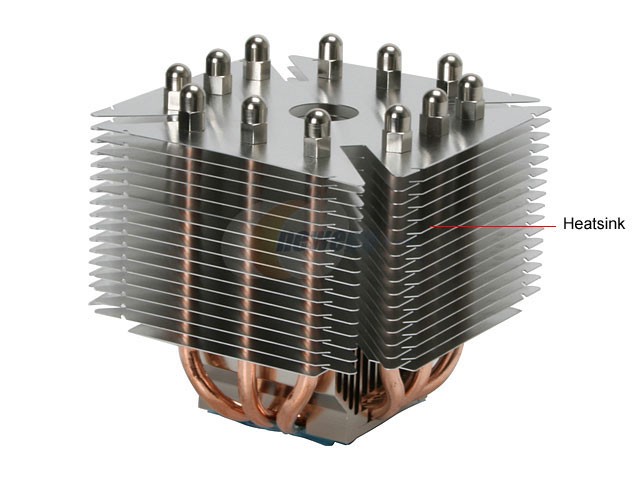
> That looks awesome, like air condition coils for cooling. Very cool. <
Yes, they're similar to the Ninja (mini!) heatsink on the CPU in my HTPC.
| Description: |
|
| Filesize: |
53.3 KB |
| Viewed: |
6608 Time(s) |
|
_________________
- Tim
|
|
| Back to top |
|
|
VideoGrabber
Joined: 09 Apr 2006
Posts: 933
Location: Michigan
|
| Posted: Thu Jan 07, 2010 6:58 pm Post subject: |
|
|
Gary,
> My brother has a rear-projection Samsung LED TV. I assume it pulses at the same speed? <
Yes, that's correct. He has the HL67A750, from what I remember. Phlatlight claims a 100,000 hour lifespan on their LED emitters.
_________________
- Tim
|
|
| Back to top |
|
|
macgyver655
Joined: 22 Aug 2007
Posts: 8508
|
| Posted: Thu Jan 07, 2010 7:17 pm Post subject: |
|
|
| garyfritz wrote: |
But each mirror is a separate pixel. |
Well now I'm really going to throw your a curve and it pertains to my comment on more then 1 mirror per pixel. As I've read on and parts of my memory return I have a more defined explanation.
Although the concept is 1 mirror for 1 pixel is there, there can be more then 1 mirror per pixel. Let me explain.
Lets say you have a 1080 DMD. 1920X1080 equals 2,073,600 mirrors. Now lets say you input a 480 signal. 640X480 equals 307,200 pixels. So in order to use the entire DMD the input must be scaled to 2, 073,600 pixels. Internal scaler does the processing. So 307,200 pixels must be scaled up to 2,073,600 pixels. So 1 pixel of the original signal now becomes multiple pixels on the DMD. I'll let you do the math. So altho the DMD is using all its mirrors the original signal didn't have that many pixels.
Have a headache yet?
|
|
| Back to top |
|
|
Nashou66

Joined: 12 Jan 2007
Posts: 16171
Location: West Seneca NY
|
|
| Back to top |
|
|
VideoGrabber
Joined: 09 Apr 2006
Posts: 933
Location: Michigan
|
| Posted: Thu Jan 07, 2010 7:28 pm Post subject: |
|
|
Mark_A_W commented:
> Unless they are doing a much faster sequence of colours with the leds, but the leds will take some time to turn off, so there will be limits. <
I don't have the exact numbers in front of me, but the LEDs turn off in <100 uS, and there is 0 persistence.
ecrabb wrote:
> As far as I know, for anything recent/current, there's a mirror on the DMD array for each pixel on screen. So, for a 1080p projector, the DMD has an array of 1920x1080 mirrors on the DMD, or exactly 2,073,600 mirrors. <
This is probably true for at least some displays, but others use a technique called wobulation to generate the full 1920x1080 resolution, using a 960x1080 DMD array. This technique also helps to eliminate SDE. Because of this temporal multiplexing, Samsung RPTVs (all the TI-based DLPs?) use the checkerboard method to generate 3D images, at full resolution.
(I was going to link to a TI WhitePaper on the subject, but strangely enough, dlp.com has nuked every link to every document on 3-D display technology they had, just a few days before CES started. Weird. I'll attach a copy of the smaller PDF that I saved locally.)
| Description: |
| Describes how 3-D is done on DLP using checkerboarding. |
|

Download |
| Filename: |
DLP 3D HDTV Technology.pdf |
| Filesize: |
414.58 KB |
| Downloaded: |
309 Time(s) |
_________________
- Tim
Last edited by VideoGrabber on Thu Jan 07, 2010 7:40 pm; edited 1 time in total
|
|
| Back to top |
|
|
garyfritz
Joined: 08 Apr 2006
Posts: 12088
Location: Fort Collins, CO
|
| Posted: Thu Jan 07, 2010 7:29 pm Post subject: |
|
|
| macgyver655 wrote: | Although the concept is 1 mirror for 1 pixel is there, there can be more then 1 mirror per pixel. Let me explain.
Lets say you have a 1080 DMD. 1920X1080 equals 2,073,600 mirrors. Now lets say you input a 480 signal. 640X480 equals 307,200 pixels. So in order to use the entire DMD the input must be scaled to 2, 073,600 pixels. |
Sure, that's how it works with any scaled image. But that's not a feature of the DMD itself -- it's just displaying the pixels it's told to. That's the scaler stretching the 480p image to fit a 1080p panel. You'd get the exact same pixels displayed if you sent the same scaled output to an SXRD or LCD panel.
There's still 1 mirror per pixel, but it's per pixel of the post-scaler output, not the 480p input. It has nothing to do with special DMD processing for contrast or shading, or getting brighter images by "smearing" the pixels. It's just scaling the input to match the panel resolution.
|
|
| Back to top |
|
|
VideoGrabber
Joined: 09 Apr 2006
Posts: 933
Location: Michigan
|
| Posted: Thu Jan 07, 2010 7:35 pm Post subject: |
|
|
> Well now I'm really going to throw your a curve and it pertains to my comment on more then 1 mirror per pixel. <
I'll avoid pointing out that there's still only 1 mirror being used to display each pixel on-screen, even though there are more display pixels than source pixels. Whoops.
While you won't find more than one mirror being used to display a single screen pixel, the opposite is certainly possible. Wobulation is already being used to display 2 pixels using 1 mirror, and can be used for up to 4. So in the future, a 1920x1080 DMD device could be used to generate a Quad-Definition 3840x2160 image, at full resolution, with 4 pixels/mirror.
_________________
- Tim
Last edited by VideoGrabber on Thu Jan 07, 2010 7:39 pm; edited 3 times in total
|
|
| Back to top |
|
|
VideoGrabber
Joined: 09 Apr 2006
Posts: 933
Location: Michigan
|
| Posted: Thu Jan 07, 2010 7:36 pm Post subject: |
|
|
Dang! Gary beat me to it.  Now you know how slow I type. Now you know how slow I type.
_________________
- Tim
|
|
| Back to top |
|
|
ecrabb
Forum Moderator

Joined: 13 Mar 2006
Posts: 15909
Location: Utah
TV/Projector: JVC RS40, Epson 5010
|
| Posted: Thu Jan 07, 2010 8:16 pm Post subject: |
|
|
| macgyver655 wrote: | Quote:
"Error-diffusion artifacts caused by averaging a shade over different pixels, since one pixel cannot render the shade exactly."
Now I agree on the 1 mirror per pixel (per se) issue, but I'm still thinking multiple mirrors have to be used to increase a shade or contrast of an area of the image. |
The quote you posted sounds like it's only a partial quote, but regardless, sounds like its referring to dithering. Error-diffusion is a form of dithering. I think older single-chip machines did use dithering (maybe current machines still do).
That would NOT mean though, for instance, if there is a single white pixel in the source on a black background that there would be any lighter pixels surrounding the light pixel. That would actually be perceived as a decrease in both contrast and resolution. To reference a the last couple of posts, that also what a lower-resolution pixel looks like resampled to a higher resolution. Anyway, keep reading...
| garyfritz wrote: | | I believe I read that the TI DMDs handle 1024 levels of brightness. That means you have 30 bits of color represented in each and every individual pixel. I can't believe you'd need to dither pixels together to handle shading. |
Gary, that 1,024 level brightness limit is probably a time-imposed limitation, with human eye sensitivity also a factor. In essence, that may be for a single DMD running monochrome with no color wheel. Perhaps throwing a 6-segment color wheel in the light path and forcing the DMD to represent 6 different luma values in the same time it would usually represent one, may cut the color to something like 7-bits/per pixel. That would explain the need for dithering and bad banding, something quite prevalent in early DLP projectors. No such limitation would exist in 3-chip devices.
So, yes - I think there is some dithering, but it has nothing to do with brightness or contrast per se, but as a way to increase the apparent dynamic range (not contrast), and reducing banding.
SC
|
|
| Back to top |
|
|
|
|